
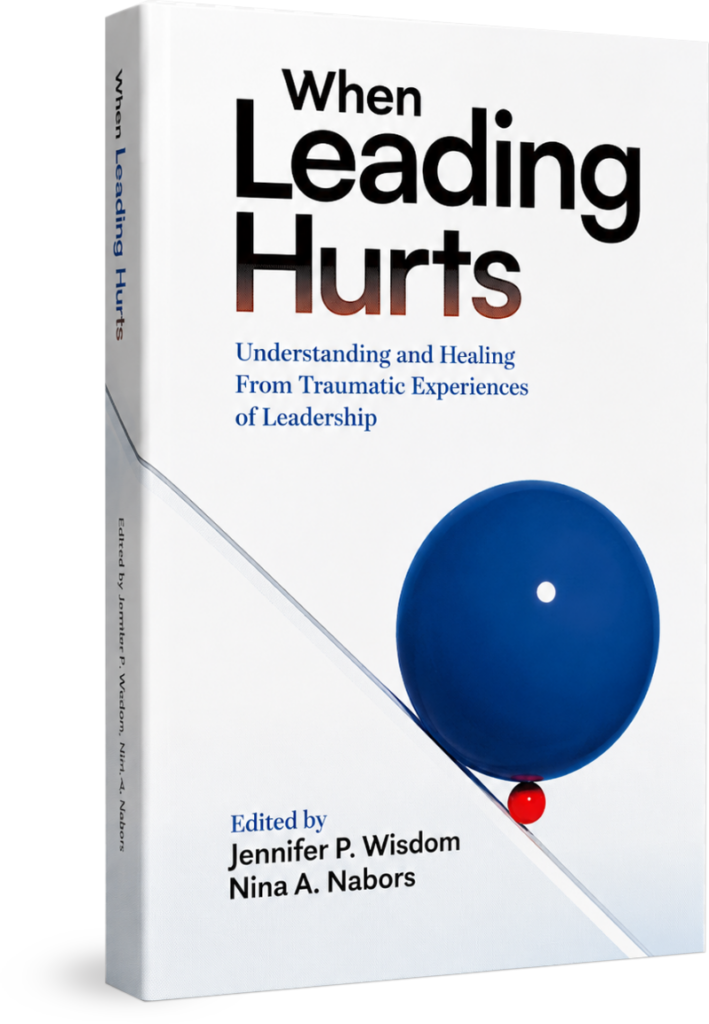
Leadership Can Be Rewarding. It Can Also Be Traumatic.
Leadership is often described as challenging, stressful, and demanding. Yet many leaders experience something more profound: events that fundamentally alter their confidence, identity, career aspirations, and well-being.
We call these traumatic experiences of leadership.
Traumatic experiences of leadership occur when adverse workplace events are directly tied to a person’s role as a leader and leave lasting psychological, emotional, professional, or physical effects.
These experiences may stem from public humiliation, organizational betrayal, ethical conflicts, chronic undermining, sabotage, leading through crises, or carrying the emotional burden of others’ suffering. Too often, these experiences are misunderstood as burnout, poor performance, or a lack of resilience.
They are not.
When Leading Hurts: Understanding and Healing from Traumatic Experiences of Leadership brings together leading psychologists, researchers, executive coaches, and organizational consultants to introduce this emerging area of scholarship.
Together, the contributors examine why traumatic experiences of leadership occur, how they affect leaders and organizations, and what leaders, organizations, and helping professionals can do to prevent harm and promote healing.
This website serves as a resource for leaders, researchers, coaches, organizations, and anyone interested in advancing the science and practice of understanding traumatic experiences of leadership.
Meet The Editors

Jennifer P. Wisdom,
PhD, MPH, ABPP
Organizational psychologist, researcher, leadership consultant, and board-certified consulting psychologist whose work focuses on leadership development, organizational systems, and evidence-based management.

Nina Nabors,
PhD, ABPP
Board-certified clinical psychologist, therapist, and professor whose work focuses on leadership development, organizational consulting, resilience, and psychological well-being.
Together, Jennifer and Nina are committed to advancing research, increasing awareness, and helping organizations recognize and address traumatic experiences of leadership before they undermine leaders, teams, and organizational performance.
Speaking, Consulting,
and Collaboration
The Challenge
Traumatic experiences of leadership affect organizations across every sector—including healthcare, higher education, government, nonprofits, public safety, and private industry.
How We Help
Whether your organization is navigating organizational change, leadership turnover, burnout, workplace conflict, or major crises, understanding how leadership experiences shape organizational performance has never been more important.
Our Commitment
Together, we can build healthier organizations by supporting the people entrusted to lead them.